Other Ways to Say Have a Great Day: 75 Examples
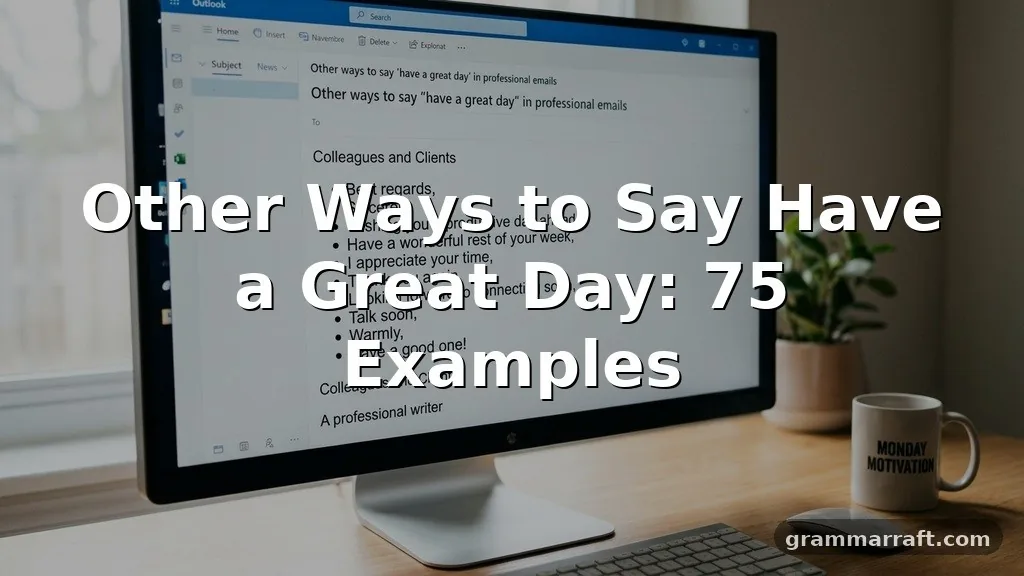
Finding other ways to say have a great day can make a routine goodbye sound warmer, funnier, more personal, or more professional. The right words show that you’re paying attention to the person and the moment, rather than sending the same familiar phrase every time.
A coworker may need an encouraging sign-off, while a partner might appreciate something affectionate and specific. A friend may respond best to a playful message, and a customer usually needs a polished, respectful closing.
Below, you’ll find natural alternatives for texts, emails, conversations, romance, work, and casual goodbyes. You’ll also learn how to choose a phrase that fits the relationship, the setting, and the kind of day someone is about to have.
The Best Alternatives at a Glance
“Have a great day” is positive and universally understood, but it isn’t your only option. Small changes in wording can make the message more energetic, thoughtful, relaxed, or personal.
Here are some versatile alternatives that work in many everyday situations:
- Hope you have a wonderful day.
- Enjoy the rest of your day.
- Wishing you a day full of good things.
- Make today a good one.
- Hope today treats you kindly.
- Have an amazing day ahead.
- Go make the most of today.
- Enjoy every minute of your day.
- I hope your day goes beautifully.
- Take care and enjoy your day.
- Here’s to a really good day.
- Hope something great happens for you today.
“Hope you have a wonderful day” is one of the closest replacements because it keeps the same friendly meaning while sounding a little more personal. “Enjoy the rest of your day” is especially natural if the day has already started.
For a more encouraging tone, try “Make today a good one” or “Go make the most of today.” These phrases suggest confidence and energy without sounding overly formal or sentimental.
How to Choose the Right Phrase
The best alternative depends less on the words themselves than on the relationship behind them. A phrase that sounds warm in a text to a close friend may feel too familiar in a business email.
Think about three details before you write: who will receive the message, what they’re doing next, and how much emotion you want to show. A short “Enjoy your day” may be perfect after a quick purchase, while “I hope today brings you a little peace” suits someone facing a difficult appointment.
| Situation | Natural phrase | Why it works |
|---|---|---|
| Casual goodbye | Enjoy your day! | Simple, friendly, and easy to say aloud |
| Professional email | Wishing you a productive day. | Polished without sounding stiff |
| Close friend | Go make today a good one! | Energetic and encouraging |
| Romantic message | Hope your day is as wonderful as you are. | Affectionate and personal |
| Someone under pressure | Hope today goes gently for you. | Supportive without demanding cheerfulness |
| Funny text | May your coffee be strong and your meetings short. | Uses humor tied to ordinary daily life |
| Customer or client | Thank you, and enjoy the rest of your day. | Courteous and service-oriented |
Also consider whether the person has already told you about their plans. Specific language usually feels more genuine than a general wish. “Good luck with your presentation today” followed by “I hope the rest of your day goes smoothly” shows more care than a standard closing alone.
There’s no need to make every goodbye elaborate. The strongest wording is often brief, natural, and connected to the conversation you’ve just had.
Professional Ways to Say Have a Great Day
Professional communication calls for warmth with a clear boundary. You want to sound approachable, but the phrase should still suit an email to a manager, customer, client, colleague, student, or business contact.
When you want to encourage a colleague’s efforts specifically, explore these other ways to say keep up the good work.
These options work well in emails, meetings, reception desks, customer service conversations, and workplace chats:
- Wishing you a productive day.
- I hope the rest of your day goes well.
- Enjoy the remainder of your day.
- Best wishes for a successful day.
- Have a pleasant afternoon.
- I hope everything goes smoothly today.
- Thank you, and enjoy your day.
- Wishing you a positive and productive day ahead.
- I hope your day is off to a good start.
- Take care, and have a good afternoon.
“Wishing you a productive day” is useful after discussing a deadline, project, or schedule. It sounds purposeful, though it may be less suitable if the person is taking time off or dealing with a personal matter.
“I hope the rest of your day goes well” is a safe choice because it doesn’t assume the person’s plans. It can close a formal email without sounding as distant as “Regards” by itself.
Professional Email Examples
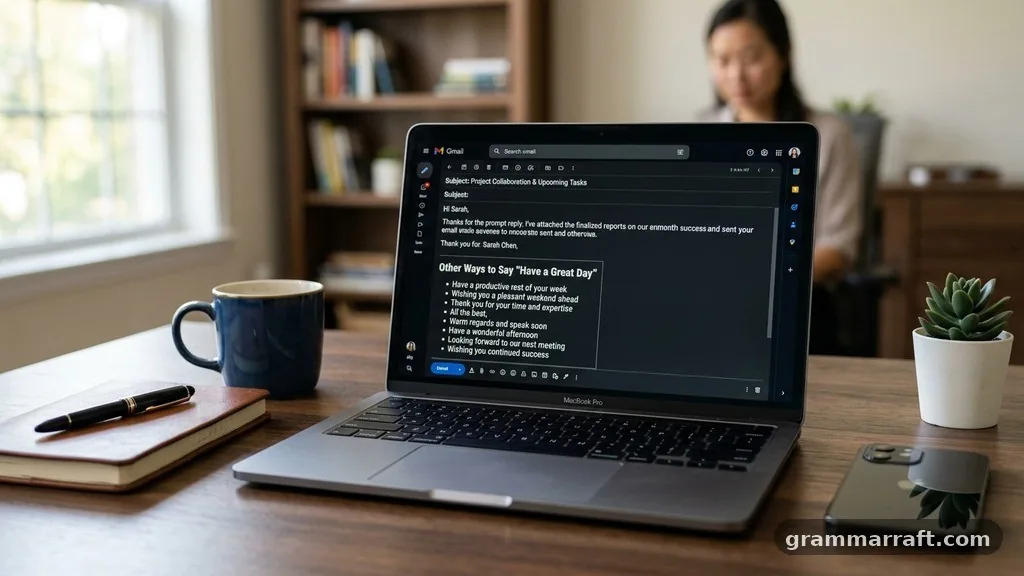
At the end of a customer email, write: “Thank you for getting in touch. I hope the rest of your day goes smoothly.” This combines appreciation with a pleasant closing and avoids sounding like a copied script.
For a coworker, you could say: “Thanks for your help with this. Wishing you a productive afternoon.” The reference to their help makes the message more specific and gives the closing a reason to be there.
With a client, “It was a pleasure speaking with you. Enjoy the rest of your day” is polished but still conversational. If the interaction has been formal, “Have a pleasant afternoon” may be the better fit.
Avoid overly casual phrases such as “Go crush it” unless you know the workplace culture well. Professional tone varies by industry, country, relationship, and communication channel, so match the level of formality already used in the conversation.
Sweet and Thoughtful Alternatives
Sometimes “have a great day” needs to carry more feeling. A thoughtful message doesn’t need dramatic language; it simply needs to sound as if it was written for a real person rather than copied from a list.
Pairing your goodbye with gratitude makes it even warmer—see these other ways to say thank you so much.
Try one of these warm alternatives:
- I hope today brings you plenty of reasons to smile.
- Wishing you a day filled with good moments.
- I hope your day is kind to you.
- May today bring you something unexpectedly wonderful.
- I hope everything falls into place for you today.
- Sending you good thoughts for the day ahead.
- I hope you get a chance to enjoy something just for yourself.
- Wishing you a calm, happy, and meaningful day.
- I hope today gives you exactly what you need.
- May your day be lighter than you expect.
“I hope your day is kind to you” is especially useful for someone who feels tired, anxious, or overwhelmed. It offers support without insisting that the day must be exciting or perfect.
“I hope today brings you plenty of reasons to smile” feels brighter and more affectionate. It works for a friend, family member, or partner, particularly in a morning text.
Specific details make sweet messages stronger. Instead of writing only “Have a great day,” try “I hope your first day at the new job goes smoothly” or “I hope you get some quiet time after that busy morning.”
Romantic Ways to Say Have a Great Day
Romantic goodbyes usually work best when they combine affection with a small personal detail. The message can be tender without becoming overly dramatic, especially if you’re sending it during a busy morning.
Here are romantic alternatives for a partner, spouse, someone you’re dating, or a person you’re getting to know:
- Hope your day is as wonderful as you are.
- I’ll be thinking about you today.
- Go have a beautiful day, sweetheart.
- I hope today makes you smile as much as you make me smile.
- Have an amazing day, and save some good stories for me.
- Sending you a kiss to start your day.
- I hope everything goes well today, love.
- Make the most of today, and I can’t wait to hear about it later.
- Have a lovely day, my favorite person.
- I hope your day is bright, easy, and full of little wins.
“I’ll be thinking about you today” is romantic because it focuses on the connection between you, not just the other person’s schedule. It’s short enough for a text and affectionate without demanding a response.
For a long-term partner, add something concrete: “I hope your meeting goes well, love. I’ll see you tonight.” The mention of a shared plan makes the sentence feel lived-in and natural.
Flirty Examples
A flirty message can be playful rather than intense. Try “Have a great day, but don’t have too much fun without me” or “Go be charming, as if you need any practice.”
You can also use a light compliment: “Hope your day is amazing—you’ve already made mine better.” This works best when there is an established romantic or playful connection.
Be careful with flirtation in uncertain situations. A phrase that seems harmless to one person may feel intrusive in a workplace or early acquaintance, so keep the tone proportional to the relationship.
Funny and Playful Ways to Say It
Humor can turn an ordinary goodbye into a memorable message, especially between friends or close coworkers. The safest jokes are based on familiar daily experiences rather than personal criticism.
Consider these funny alternatives:
- May your coffee be strong and your meetings be short.
- Go forth and pretend to know what you’re doing.
- Have a day so good your phone battery lasts until bedtime.
- May your inbox stay quiet and your snacks stay plentiful.
- Try not to be too impressive today.
- Go make questionable decisions—but only the fun kind.
- May every traffic light be green for you.
- Have a great day, and remember to act surprised when Friday arrives.
- May your Wi-Fi be reliable and your notifications be few.
- Go be the main character for a while.
“May your coffee be strong and your meetings be short” is recognizable because it combines two common workday wishes. “May every traffic light be green for you” is more general and works for someone heading out on errands.
Keep the humor aligned with the recipient’s personality. A joke about deadlines may cheer one coworker and annoy another, especially if they are already stressed about work.
Text messages allow more playful wording because tone can be softened with context or an emoji, but email usually calls for restraint. If the phrase could be misunderstood without hearing your voice, choose a clearer version.
Ways to Say It to a Friend or Family Member
With friends and relatives, you can be more relaxed, personal, and expressive. These goodbyes often sound best when they reflect shared memories, inside jokes, or something the person is about to do.
Here are natural choices for everyday conversations and messages:
- Go enjoy your day!
- Hope you have a really good one.
- Have fun out there.
- Make today count.
- Hope something great happens for you today.
- Enjoy the sunshine—or at least find a good window.
- Have a brilliant day, and call me later.
- Go do something that makes you happy.
- Hope today is full of good surprises.
- Take care and enjoy every minute you can.
“Have fun out there” is informal and upbeat, making it useful before a friend leaves for an event, trip, class, or busy day. “Hope you have a really good one” sounds natural in speech because it avoids repeating the word “day.”
For family, warmth may matter more than originality. “I hope today is easy on you” can mean more than a clever phrase if the person has a demanding appointment or a difficult task ahead.
You can make the message personal by adding a follow-up: “Enjoy the concert tonight—I want all the details afterward.” That sentence gives the recipient a reason to feel remembered and creates an opening for future conversation.
Messages for a Difficult or Important Day
“Have a great day” isn’t always the right wish. Someone may be facing an exam, medical appointment, job interview, funeral, difficult conversation, or first day in a new role.
In those moments, avoid forcing cheerfulness. Supportive language recognizes the situation while expressing confidence, care, or companionship.
- I hope today goes as smoothly as possible.
- I’m thinking of you and wishing you strength today.
- You don’t have to handle everything perfectly.
- I hope you get some good news today.
- Take things one step at a time.
- I’m here if you need me.
- I hope the day is gentler than you expect.
- Good luck today—you’ve prepared for this.
- I’ll be thinking of you while you’re there.
- Whatever happens, you won’t have to face it alone.
“I hope today goes as smoothly as possible” is practical and honest. It doesn’t promise that everything will be wonderful, which makes it more appropriate for uncertain circumstances.
Before an interview, “Good luck today—you’ve prepared for this” offers encouragement without guaranteeing an outcome. Before an exam, “Take a breath and trust the work you’ve done” may be more useful than a generic wish.
For grief or serious difficulty, keep the message simple. “I’m thinking of you today” or “I’m here if you need anything” may be enough, especially when the person is unlikely to have energy for a long exchange.
How to Make Your Message Sound Natural
The difference between a memorable goodbye and a generic one often comes down to one small detail. You don’t need unusual vocabulary or an elaborate sentence; you need wording that fits the moment.
Add a Specific Detail
Connect the wish to the person’s plan: “Hope your presentation goes well today,” “Enjoy your first day in the new office,” or “Have fun at the game tonight.” This approach makes the phrase relevant immediately.
Match the Energy
Use bright language for celebrations and relaxed conversations, but choose calmer words for stressful situations. “Go have an amazing day” is energetic, while “I hope today feels manageable” is supportive.
Use the Person’s Preferred Tone
Some people enjoy affectionate messages, while others prefer direct language. A short “You’ve got this” may be more welcome than “May your day be filled with endless joy,” even when both are intended kindly.
Vary Your Sentence Structure
Not every message needs to begin with “Have.” Try “Wishing you a wonderful day,” “Hope today goes well,” “Enjoy your afternoon,” or “Make today a good one.” These alternatives keep your writing from sounding repetitive.
Don’t Overdo It
A goodbye should usually remain easy to read and easy to answer. Several emotional sentences can feel disproportionate when a quick sign-off is all the situation requires.
For more guidance on clear, considerate communication, the Merriam-Webster definition of tone is a useful reference for thinking about how language conveys attitude and feeling.
Common Mistakes to Avoid
Even a positive phrase can miss the mark if it ignores the context. The most common problem is using a cheerful expression when the person needs empathy instead.
- Being too formal: “May you experience an exceptionally pleasant day” sounds unnatural in an ordinary text.
- Being too familiar: “Have a gorgeous day, gorgeous” may be uncomfortable if the relationship is not romantic.
- Ignoring the situation: Someone attending a difficult appointment may not want to hear that the day will be amazing.
- Using empty exaggeration: Repeatedly calling every day “the best day ever” can make the message feel automatic.
- Adding pressure: “Make today count” may sound motivating, but it can also feel demanding to someone who is exhausted.
- Writing too much: A long speech can overwhelm a simple goodbye.
- Forgetting the medium: A playful text may not belong in a formal client email.
Another mistake is treating originality as the main goal. A familiar phrase spoken sincerely is usually better than an unusual sentence that sounds copied, forced, or unlike your normal voice.
Read the message aloud before sending it if you’re unsure. If you wouldn’t say the words in a real conversation, shorten them or replace them with something more natural.
Finally, remember that punctuation changes tone. “Have a great day!” feels enthusiastic, while “Have a great day.” can feel flat in some text conversations. Neither is automatically wrong, but the punctuation should match the warmth you intend.
Frequently Asked Questions
What can I say instead of “have a good day”?
You can say “Enjoy your day,” “Hope you have a wonderful day,” “Wishing you a lovely day,” or “Make today a good one.” The best choice depends on whether you want to sound casual, professional, encouraging, or affectionate.
What is a unique way to say “have a great day”?
Try “Hope today brings you an unexpected reason to smile” or “May every small thing go your way today.” A phrase becomes more unique when it refers to the person’s plans, personality, or current situation rather than relying only on a creative synonym.
How do I say “have a great day” professionally in an email?
Use “I hope the rest of your day goes well,” “Wishing you a productive afternoon,” or “Thank you, and enjoy the remainder of your day.” These phrases are courteous and warm without being too casual.
What is a funny way to wish someone a good day?
Say something like “May your coffee be strong and your meetings be short” or “May your inbox remain mysteriously quiet.” Choose humor that fits the relationship and avoid jokes about sensitive personal issues.
What is a romantic way to wish someone a good day over text?
Try “I hope your day is as wonderful as you are” or “I’ll be thinking about you today—have an amazing day.” Adding a personal detail, such as an upcoming meeting or plans to see each other later, makes the message feel more genuine.
Conclusion
The best other ways to say have a great day are the ones that match the person and the moment. Use professional wording for work, warmer language for friends and family, affectionate phrases for a partner, and gentle encouragement when someone is facing a difficult day.
A short message can still feel personal when you mention a plan, choose a fitting tone, or add one sincere detail. The next time you’re about to write a routine goodbye, choose words that sound like you—and make the other person feel remembered.
Looking for evening-specific alternatives? Check out these other ways to say have a good rest of your day.