SU Meaning in Text: What It Really Means
The meaning of “su” in text depends heavily on the conversation around it. In one message, it may mean “see you”; in another, it can be a shortened form of “shut up,” “what’s up,” or a platform-specific phrase such as “swipe up.”
That uncertainty is why a two-letter reply can feel surprisingly difficult to interpret. Capitalization, punctuation, the relationship between the people texting, and whether the message appeared on Snapchat, Instagram, or ordinary SMS all matter.
This guide explains the main meanings of “su” in text, shows how to tell them apart, and gives practical examples for messages from a friend, a date, a stranger, or a family member. You’ll also see how to reply without creating unnecessary confusion.
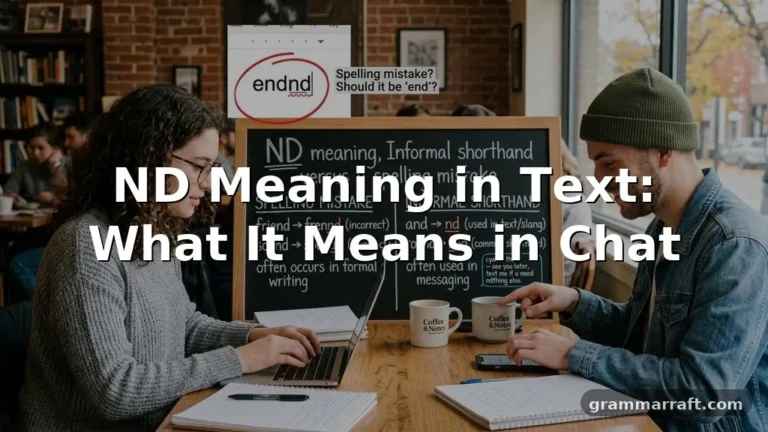
The Most Common Meaning of SU in Text
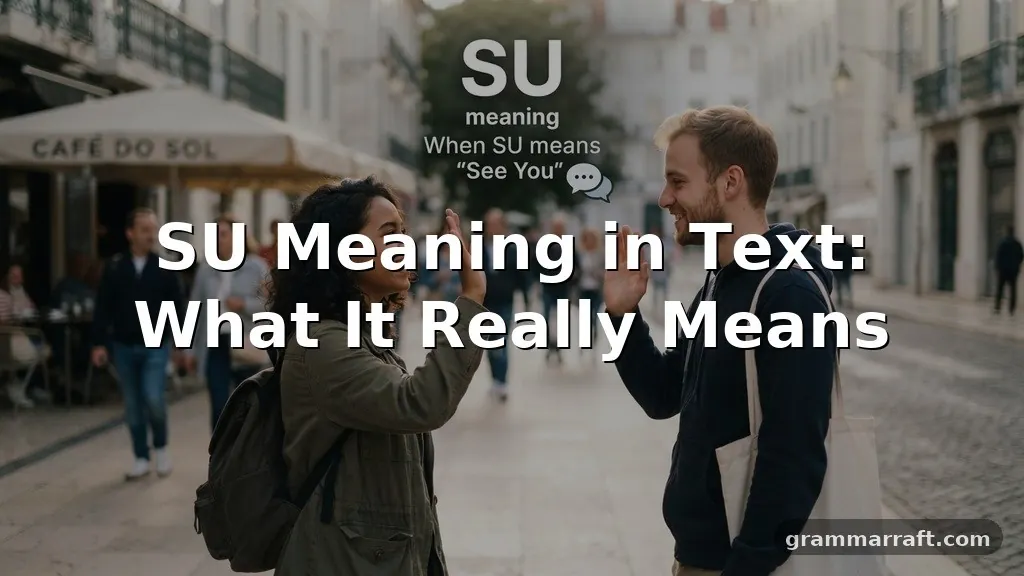
The most common interpretation of “su” is usually “see you”, especially when it appears at the end of a conversation. For example, someone might write “su tomorrow” to mean “see you tomorrow,” although “cu” or “cya” are more widely recognized abbreviations for the same idea.
“SU” can also represent “shut up”. In that use, the tone ranges from playful disbelief to genuine irritation. A friend who receives a surprising photo might reply “su no way,” meaning something like “shut up, no way,” while the same letters sent alone after an argument could sound rude.
A third possibility is “what’s up?”, particularly when “su” is being used as an extremely short version of “sup.” This form is less clear because “sup” itself already drops letters from “what’s up,” and removing the final “p” makes the message harder to recognize.
Context should come first. A message such as “su after class” probably means “see you after class,” while “su, you actually did it?” is more likely to mean “shut up” as an expression of surprise.
| Possible meaning | Typical context | Likely tone | Example |
|---|---|---|---|
| See you | Ending a chat or confirming plans | Friendly or neutral | “Su tomorrow” |
| Shut up | Reaction to surprising or annoying news | Playful, shocked, or rude | “Su, that’s impossible” |
| What’s up? | Opening a casual conversation | Informal and friendly | “Su?” |
| Swipe up | Older social-media instructions | Practical | “SU for the link” |
SU Meaning Based on the Conversation
The words around “su” often provide more useful information than the abbreviation itself. Short messages rarely carry enough meaning on their own, so read the previous message, the reply that follows, and the apparent purpose of the exchange.
When SU means “see you”

“See you” is the strongest interpretation when “su” follows a time, place, or plan. Messages such as “su Friday,” “su at lunch,” and “su later” all have the structure of a goodbye or meeting confirmation.
Some people use “su” because they type quickly or have developed personal shorthand with close friends. Others may use it as a typo or a less common alternative to “c u.” If the person normally ends conversations with brief abbreviations, “see you” becomes even more likely.
When SU means “shut up”
“Shut up” usually appears as a reaction rather than a sign-off. It may be followed by an exclamation mark, laughing emoji, or another response that shows surprise: “SU 😂,” “su, are you serious?” or “shut up, that’s amazing.”
Still, don’t assume it is friendly. “SU” sent after criticism, disagreement, or a personal comment may be an abbreviated insult. A period can make it feel more abrupt, while “su lol” usually softens it.
When SU means “what’s up?”
If “su?” begins the chat and contains a question mark, the sender may be asking how you are or what you’re doing. This meaning is related to “sup,” “wassup,” and “what’s up,” but it is not as immediately recognizable.
A safe response is to answer both possibilities lightly: “Not much—what’s up with you?” That reply works if the sender is greeting you, and it gives them an easy chance to clarify if they meant something else.
- Look at whether “su” begins or ends the conversation.
- Check for a question mark, emoji, or exclamation point.
- Notice whether the message refers to plans or a time.
- Compare the sender’s usual texting habits.
- Consider whether the exchange sounds affectionate, joking, annoyed, or practical.
What Does SU Mean on Snapchat?
On Snapchat, “su” can have meanings that differ from ordinary texting. In older Snapchat usage, “SU” often meant “swipe up”, an instruction telling viewers to swipe upward on a story to open a link, website, video, or other attached content.
That meaning became common because Snapchat stories could direct viewers to linked material. A creator might post “SU for the details” or “SU to shop,” using the abbreviation as a call to action rather than as part of a personal conversation.
Platform features change, though. Snapchat has adjusted how links and story interactions appear over time, so “swipe up” may not always describe the current gesture or interface. The phrase can still appear in captions and messages even when the visible control has changed.
“SU” on Snapchat may also mean the same things it does elsewhere. A friend could write “su” after seeing a surprising snap, intending “shut up,” or send “su later” as “see you later.” The app alone does not determine the definition.
How to read an SU Snapchat story
Look at the content surrounding the abbreviation. If “SU” appears over a product image, news item, event announcement, or promotional story, “swipe up” is the obvious interpretation. If it appears in a direct message reacting to a personal photo, “shut up” or “see you” may fit better.
A public story and a private chat also create different expectations. A creator addressing hundreds of viewers is likely giving an instruction, while a close friend is more likely using a casual slang term.
When the message is unclear, ask directly: “Do you mean swipe up?” That is faster and more accurate than opening random links or guessing from the abbreviation alone.
SU Meaning on Instagram, TikTok, and Other Apps
The meaning of “su” can shift between platforms because each app has its own vocabulary. On Instagram, “SU” may still refer to “swipe up” in older posts or conversations, but users may now say “tap the link,” “check my bio,” or “use the link sticker” instead.
On TikTok, a creator might use “SU” in a comment or direct message as shorthand borrowed from Snapchat culture. It could also mean “shut up” as a reaction to a funny or impressive video. The surrounding caption matters more than the app name.
In ordinary text messages, there is no built-in social-media action to guide interpretation. A message such as “su for the link” could still mean “swipe up,” but it might also be a mistyped instruction or an abbreviation familiar only to that sender and their friend group.
Capital letters and punctuation
Capitalization can offer a clue, but it is not a rule. “SU” in all capitals may look like an acronym or instruction, whereas “su” in lowercase feels more like casual texting. Many people leave the caps lock untouched, so the difference may mean nothing.
Punctuation can be more revealing. “SU?” looks like a greeting or question, “SU!” often signals excitement or surprise, and “su later” strongly suggests “see you later.” A laughing emoji can turn “shut up” from an insult into playful disbelief.
Other social-media clues
Pay attention to whether the sender includes a link, points toward a story, or refers to a product. A phrase such as “SU on my story” is likely an instruction connected with social-media content, while “su, you got the job?” is almost certainly an emotional reaction.
Do not treat every abbreviation as universal. Online slang spreads quickly, but it also becomes local: one group’s normal shorthand may be unfamiliar to another group, another age group, or another country.
Does SU Mean Shut Up?
Yes, “SU” can mean “shut up,” but the emotional force depends on how it is used. In casual online speech, “shut up” often does not literally command someone to stop speaking. It can express shock, admiration, disbelief, or amusement.
For example, a friend might text “SU, you met her?” after hearing unexpected news. In that setting, the phrase may be closer to “Seriously?” or “No way!” than to an aggressive demand for silence.
The same abbreviation can become hostile if it appears without friendly signals. “SU” after someone shares an opinion may sound dismissive, especially if the sender is not a close friend. A sharp exchange can make even normally playful slang feel insulting.
How tone changes the meaning
These examples show why tone matters:
- “SU 😂” may mean playful disbelief.
- “SU, that’s incredible!” probably means “I can’t believe it.”
- “SU.” may sound abrupt or angry.
- “Can you SU?” is more likely to mean “can you shut up?” and may be confrontational.
- “SU later” is more likely “see you later,” not “shut up later.”
The sender’s personality also matters. Some people use “shut up” affectionately with siblings or close friends, while others avoid it because it sounds disrespectful. A phrase that seems harmless from one person may feel offensive from another.
How to respond if it feels rude
You do not need to guess silently. Ask, “Did you mean shut up?” or say, “That came across a little harsh.” Clear language is especially useful when the relationship is new or the conversation concerns something serious.
If the sender explains that they meant “no way” or “I’m surprised,” the misunderstanding can end quickly. If they confirm that they meant it aggressively, you have useful information about how they intend to communicate.
SU Meaning From a Guy or a Girl
There is no fixed male or female meaning for “su.” The abbreviation does not change definition simply because a guy or a girl sends it. The important clues are the message’s position in the conversation, the relationship between the people, and the tone established by earlier messages.
If someone sends “su?” after matching with you or restarting a quiet conversation, it may be a casual greeting. They might be asking “what’s up?” or inviting you to continue chatting. A reply such as “Not much—how about you?” keeps the exchange moving without making a risky assumption.
If a person writes “su later” after making plans, the natural reading is “see you later.” That message is practical and does not, by itself, prove romantic interest. Text abbreviations are weak evidence for someone’s feelings.
On the other hand, “SU 😭” after you share an unexpected story may be playful disbelief. The emoji and the subject of the story provide more information than the sender’s gender.
Does SU show flirting?
Not on its own. Flirting is communicated through a broader pattern: the person starts conversations, asks personal questions, remembers details, suggests spending time together, or responds consistently. A single two-letter abbreviation cannot establish those intentions.
Someone who sends “su?” late at night may be seeking conversation, but that does not automatically make the message romantic. Treat it as an opening and respond according to your own interest rather than trying to decode a hidden signal.
Avoiding assumptions
Texting removes facial expression, voice, and timing cues that would normally clarify meaning. Because of that, readers often fill the gap with assumptions about attraction, anger, or sarcasm.
A better approach is to answer the most harmless plausible meaning. Try “What’s up?” if “su?” looks like a greeting, or ask “See you when?” if it appears to refer to plans. A short clarification is usually less awkward than a confidently wrong reply.
Other Meanings and Abbreviations Related to SU
“SU” has meanings outside casual slang. In a school, workplace, game, or online community, it may be an acronym for an organization, department, role, or technical phrase. Those definitions cannot be determined from texting habits alone.
For example, a message about university life might use “SU” for a student union. A gaming chat may use an abbreviation specific to that game. A mental-health discussion could use “SU” as a community-specific shorthand, but readers should not assume a clinical meaning without seeing the full context.
There is also a difference between “su” and related forms such as “sup,” “s/u,” and “suh.” The extra letters or slash can change the likely reading.
| Term | Common reading | Typical use |
|---|---|---|
| su | See you, shut up, or what’s up | Short personal messages |
| sup | What’s up? | Opening a casual chat |
| s/u | Swipe up | Social-media instructions |
| c u | See you | Goodbyes and plans |
| shh | Be quiet | Direct request for silence |
Why acronym lists can mislead
Online acronym lists often collect every meaning that has appeared somewhere, but they do not rank those meanings for your particular conversation. A definition can be technically possible yet completely wrong for the message you received.
That is why a dictionary-style list should be treated as a starting point, not a final answer. The words before and after “su” carry the evidence you need.
Language and regional variation
Text slang also varies by country, age group, and language. Someone writing in English may use “su” differently from someone using Spanish, Portuguese, or another language where the same letters form a familiar word or abbreviation.
If the sender regularly switches languages, check that possibility before assuming an English slang meaning. Asking “What does su mean here?” is perfectly reasonable when the context is genuinely unclear.
How to Reply When You Don’t Know What SU Means
The best reply depends on how important the conversation is. If the message is casual and low-stakes, answer in a way that covers the most likely interpretation. If the message concerns plans, money, safety, or a sensitive subject, ask for clarification instead of guessing.
For “su?” you could reply, “Not much—what’s up?” If the sender meant “what’s up,” the conversation continues naturally. If they meant something else, they can correct you without a major misunderstanding.
For “su later,” you might write, “See you later—what time?” That response tests the “see you” interpretation while also confirming the practical detail. It is efficient and friendly.
Useful reply examples
- If you think it means “what’s up?”: “Not much. What are you up to?”
- If you think it means “see you”: “See you then—take care.”
- If you think it means “shut up” playfully: “I know, it’s wild, right?”
- If the tone feels rude: “What did you mean by ‘su’?”
- If it appears on a story: “Do you mean swipe up for the link?”
Do not over-explain your uncertainty. A simple question is enough. “What does su mean here?” sounds clearer and more natural than sending a long message about every possible definition.
When not to respond immediately
If “SU” appears in a suspicious message asking you to open a link, send payment, or share personal information, focus on the request rather than the slang. Abbreviations can make a message feel casual, but casual wording does not prove that a link or account is trustworthy.
Likewise, if the message is insulting or threatening, you are not required to debate the abbreviation. Save the conversation, use the platform’s reporting tools if necessary, and involve a trusted person when the situation feels unsafe.
Why Short Text Abbreviations Create Confusion
Abbreviations remove information. In spoken conversation, tone can show whether “shut up” is affectionate or hostile, while facial expression can distinguish surprise from anger. Text messages usually leave the reader with only letters, punctuation, timing, and emojis.
“SU” is especially ambiguous because several meanings are short and plausible. A reader may first think “see you,” while the sender intended “shut up.” Neither person is necessarily being careless; the abbreviation simply does not contain enough information by itself.
Texting culture also changes quickly. A phrase that was familiar on one platform may become less common after an interface changes, while a younger or older group may use the same letters differently. Search results and acronym lists can lag behind everyday usage.
Context beats the abbreviation
Consider the complete exchange rather than isolating the word. If someone writes, “I’m heading home now, su,” the meaning is probably “see you” or perhaps a typo. If they respond to a dramatic story with “SU 😭,” “shut up” as excited disbelief is more likely.
Conversation history can settle the question quickly. A person who has used “su” several times may have a consistent personal meaning, even if that meaning differs from the one most people recognize.
Clarity is often better than cleverness
There is no prize for decoding an unclear message without asking. A brief clarification protects both people from unnecessary embarrassment, especially in professional, romantic, or emotionally tense conversations.
If you use “su” yourself, consider writing the full phrase when the meaning matters. “See you later” takes only a moment longer to type and removes the confusion created by an abbreviation with several competing definitions.
FAQ About SU Meaning in Text
What does SU usually mean in a text message?
“SU” commonly means “see you,” “shut up,” or “what’s up?” The correct meaning depends on placement and tone. “SU later” most likely means “see you later,” while “SU, no way!” probably expresses surprise through “shut up.”
What does SU mean on Snapchat?
On Snapchat, “SU” may mean “swipe up,” particularly when it appears on a story with a link or call to action. In a private chat, it can still mean “see you,” “shut up,” or “what’s up,” just as it does in ordinary texting.
Does SU mean shut up in texting?
It can. Friends often use “SU” to show playful disbelief, but the same abbreviation may sound rude when sent during an argument or without friendly context. Emojis, punctuation, and the relationship between the sender and recipient help show which tone is intended.
What does SU mean from a guy or a girl?
The sender’s gender does not create a separate definition. A guy or girl may use “su” to mean “see you,” “shut up,” “what’s up,” or “swipe up.” Look at the conversation and reply style instead of treating the abbreviation as proof of flirting or romantic interest.
How should I reply to “SU”?
If it looks like a greeting, reply with “Not much—what’s up?” If it appears to confirm plans, respond to the plan directly. When the meaning is unclear or the tone feels rude, ask, “What do you mean by ‘su’?” That is usually the safest and clearest response.
Final Takeaway on SU Meaning in Text
The phrase “su meaning in text” has no single answer because “su” is an ambiguous abbreviation. It may mean “see you,” “shut up,” “what’s up,” or “swipe up,” with the surrounding words and platform providing the strongest clues.
Read the full exchange, notice the punctuation and emojis, and ask for clarification when the stakes are high. Once you treat context as more important than the two letters themselves, messages using “su” become much easier to understand.