
Pail vs Pale: Understanding the Difference Between Two Confusing English Words
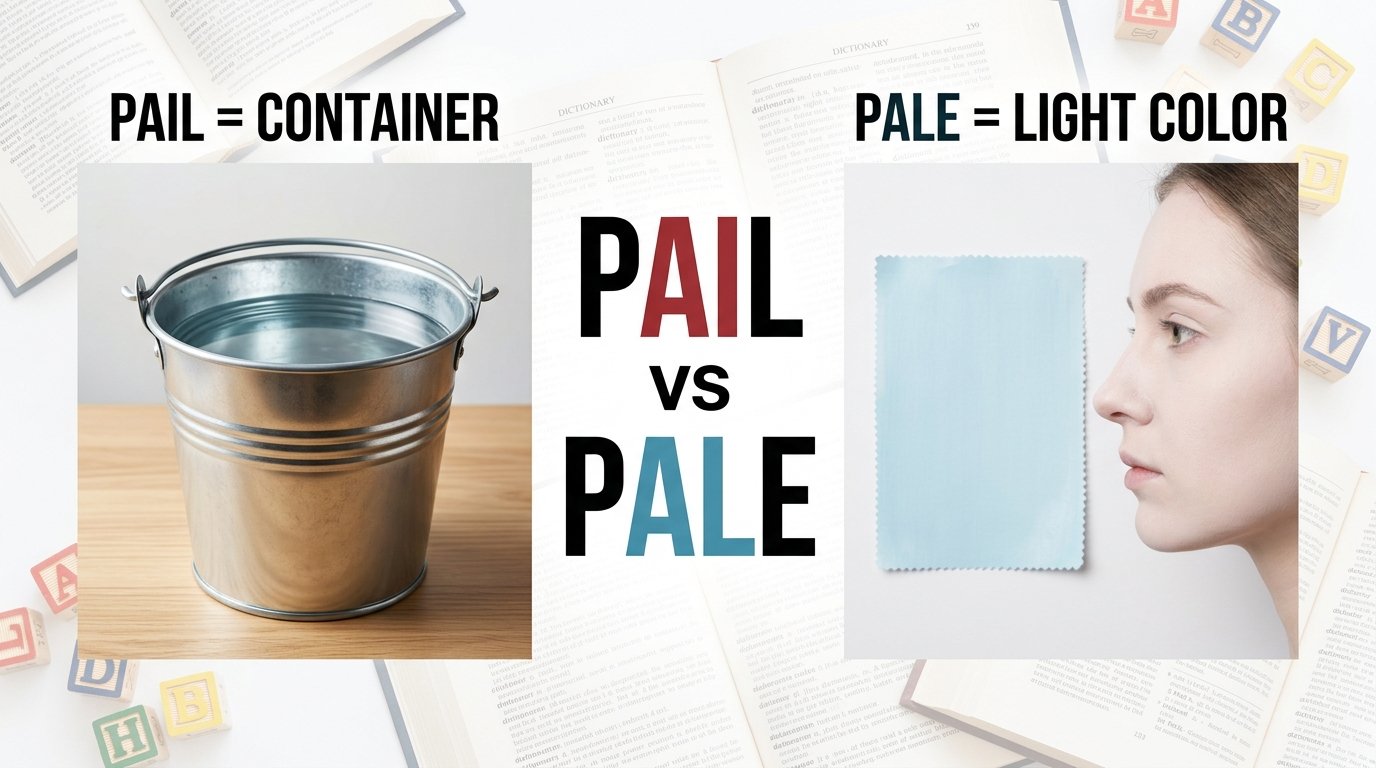
Pail vs Pale is a common English spelling confusion because these two words look and sound remarkably similar. However, their meanings are entirely different. One refers to a physical container, while the other usually describes color, appearance, or a change in intensity.
If you have ever wondered whether to write “pail” or “pale,” you are not alone. Even fluent English speakers can make this mistake, especially when typing quickly.
This guide explains the difference between pail and pale, their definitions, origins, grammatical roles, examples, and simple ways to remember which word belongs in a sentence.
Pail vs Pale: Why Does the Confusion Exist?
The confusion surrounding pail vs pale mainly comes from their nearly identical spelling and pronunciation.
Both words begin with “pa” and contain only one different vowel. In some accents, they can sound extremely similar. That makes it easy to type the wrong word without noticing the mistake.
There is another reason for the confusion. Both words appear in ordinary English conversations. You might talk about a pail of water and, in the next sentence, describe someone as pale.
Context usually makes the intended meaning clear. However, spelling errors can change the meaning completely.
See Also: Extol vs Extoll: Understanding the Difference and Correct Spelling
Why It Matters in Professional Settings
Correct spelling matters in emails, reports, websites, school assignments, product descriptions, and other professional writing.
Writing “pale of water” instead of “pail of water” may confuse your reader. Likewise, “pail skin” instead of “pale skin” can make an otherwise professional sentence look careless.
Understanding commonly confused words like these helps improve your overall English vocabulary and writing accuracy.
Pail vs Pale: Which One Is Correct?
Both pail and pale are correct English words. The correct choice depends entirely on what you want to say.
Pail is generally a noun referring to a container with a handle. It is similar to a bucket and can hold water, milk, paint, sand, or other materials.
Pale usually works as an adjective describing something that has a light color or lacks normal intensity. It can also function as a verb and, less commonly, a noun.
For example:
- She carried a pail of water.
- His face looked pale after the long journey.
- The wall was painted a pale shade of yellow.
- The child filled the pail with sand.
A useful rule is simple: pail = container, while pale = light or weak appearance.
What Does “Pail” Mean? Origins, Definition, and Usage
Definition of Pail
A pail is a container, usually cylindrical or slightly wider at the top, that commonly has a handle for carrying.
It is closely related to the word “bucket.” A pail can be made from metal, plastic, wood, or other materials.
For example, you might use a metal pail to carry water, a plastic pail for cleaning, or a small pail to collect gardening materials.
The word is generally used as a noun because it names a physical object.
Common expressions include:
- pail of water
- water pail
- paint pail
- milk pail
- cleaning pail
- garden pail
If you can physically pick it up and use it as a container, you are probably talking about a pail.
Origins of the Word “Pail”
The word “pail” has been used in English for centuries. It developed from older forms associated with a vessel or container used for carrying liquids and other materials.
Over time, the word became closely associated with the familiar bucket-like container we recognize today.
Although “bucket” is more common in everyday modern English, “pail” remains a perfectly standard word.
You may especially encounter it in descriptions involving farming, gardening, household work, painting, or traditional settings.
Why Pail Is a Common Misspelling
People often misspell “pail” as “pale” because both words look almost identical.
The error becomes particularly easy when someone is writing quickly. Since spell-checkers may recognize both words as legitimate English terms, they may not flag the mistake.
For example, if you accidentally type “a pale of water,” the software may not identify it as an error because “pale” is itself a correctly spelled word.
That is why understanding meaning is more useful than relying entirely on autocorrect.
Exploring the Significance of “Pail” in the Culinary World
Although a pail is not a specialized culinary term, containers similar to pails can have practical uses around food preparation, storage, and cleaning.
Role of a “Pail” in a Professional Kitchen
In some kitchens, restaurants, farms, and food-processing environments, bucket-like containers may be used for transporting water, cleaning materials, ingredients, or waste.
However, professional kitchens normally use specific food-safe containers when handling ingredients.
The important language point is that pail still refers to the container itself. It does not describe the color or appearance of an object.
For example:
The worker carried a pail of clean water into the kitchen.
Here, “pail” clearly identifies the container.
See Also: Most Important vs Most Importantly: Master This Common Grammar Difference
Common Reasons for the “Pail” Misspelling
Several factors explain why people confuse pail and pale.
First, the words differ by only one letter. That small spelling difference is easy to overlook.
Second, their pronunciation can sound very similar depending on the speaker’s accent.
Third, both are common English words. This means autocorrect may not recognize the wrong choice.
Fourth, fast typing and texting encourage people to focus on speed rather than meaning.
Finally, English contains many confusing word pairs with similar spellings or sounds. Learning these pairs through context is often more effective than memorizing spelling alone.
If you are unsure whether to use pail or pale, stop and ask yourself what the word describes.
Is it a physical container? Use pail.
Is it describing something light in color, weak, faint, or less intense? Use pale.
Side-by-Side Comparison: “Pail vs Pale”
| Feature | Pail | Pale |
|---|---|---|
| Part of speech | Mainly noun | Adjective, verb, and sometimes noun |
| Basic meaning | A container | Light color or reduced intensity |
| Refers to | A physical object | A quality, appearance, or condition |
| Common example | Pail of water | Pale skin |
| Related word | Bucket | Faint/light |
| Can you physically hold it? | Yes | No |
| Example sentence | She filled the pail. | She looked pale. |
This comparison makes the pail vs pale difference easier to recognize.
Think of pail as a thing and pale as a description.
Everyday Examples of “Pail” and “Pale” in Language
Seeing the words in real sentences can make the distinction much easier.
Examples With Pail
She filled the pail with water before going outside.
The farmer carried a metal pail of milk.
We used a plastic pail to wash the floor.
The children filled their pail with sand at the beach.
He left the old pail beside the garden shed.
Examples With Pale
She looked pale after feeling sick.
The morning sky had a pale blue color.
He wore a pale yellow shirt.
Her face became pale when she heard the news.
The sunlight looked pale through the clouds.
Notice how the meaning changes completely. Pail names a container, while pale describes appearance, color, or intensity.
“How to Spell Pail or Pale”: Remember the Correct Spelling
If you are searching for how to spell pail or pale, the easiest approach is to connect each spelling with its meaning.
Remember:
Pail = a container.
Pale = light or faint.
You can also connect “pail” with “paint.” Paint can be placed inside a pail, so the “ai” spelling can remind you of a physical object.
For “pale,” think about a pale face. Someone who is sick, frightened, or exhausted may have a pale face.
Another useful trick is to focus on the vowel:
- Pail → “ai” → a container you can carry.
- Pale → “ale” → a descriptive word related to lightness or appearance.
These associations make the spelling easier to remember without repeatedly checking a dictionary.
Practice Sentences
Try completing each sentence with pail or pale:
She carried a ___ of water across the yard.
He looked ___ after being awake all night.
The old metal ___ was covered with dust.
The room had a ___ blue color.
The answer is:
pail, pale, pail, pale.
Practice helps because you begin connecting each word with its meaning instead of simply memorizing its spelling.
Is Pale a Word?
Yes, pale is a word and has several grammatical uses.
As an adjective, it commonly means light in color.
For example:
She wore a pale pink dress.
It can also describe someone whose face has lost its usual color:
He looked pale after the accident.
As a verb, “pale” can mean to become less bright or less important when compared with something else.
For example:
The original painting caused the copies to pale in comparison.
Therefore, is pale a word has a simple answer: yes. It is a standard English word with several meanings and uses.
Literature and Media Mentions: Correct Usage of “Pail vs Pale”
Both words appear regularly in literature, journalism, film dialogue, and everyday media because they describe very different ideas.
A “pail” often appears in scenes involving farms, wells, gardens, beaches, household chores, or manual work. The word can create a traditional or rustic feeling.
“Pale,” on the other hand, frequently appears when authors describe people, weather, light, landscapes, emotions, or colors.
For example, literature might describe a pale moon, pale face, or pale light.
These examples demonstrate why context is so important. Writers choose “pail” when discussing a container and “pale” when describing appearance, color, or intensity.
Frequently Asked Questions about Pail vs Pale
What’s the correct way to spell “pail”?
Pail is correct when referring to a bucket-like container. Pale is correct when describing light color, faintness, or someone’s appearance.
Is “pale” a French word?
No. Pale is an English word with roots in older languages. French also has related-looking vocabulary, but English “pale” has its own history.
Why is spelling “pail” correctly important?
Spelling pail correctly prevents confusion with pale, which has an entirely different meaning. Correct spelling also makes professional writing clearer and easier to understand.
Is a pail the same as a bucket?
A pail is very similar to a bucket and the terms can overlap. However, “pail” can suggest a particular style or traditional use.
How can I remember pail and pale?
Remember pail = container and pale = light or faint. You can hold a pail, but you use pale to describe something.
Conclusion: Why It’s Important to Spell “Pail” Correctly
Knowing the difference between pail vs pale can prevent a small spelling mistake from changing the meaning of your sentence. A pail is a physical container, often similar to a bucket, while pale describes light color, faintness, appearance, or reduced intensity. When choosing pail or pale, always consider the context first. If you are naming something you can carry, choose “pail.” If you are describing color or appearance, choose “pale.” With regular practice and simple memory tricks, this confusing word pair becomes easy to distinguish and use correctly.